Stoics and Epicureans
- prempothina
- Feb 27, 2021
- 8 min read
Updated: Feb 28, 2021
Socrates is reckoned as the greatest philosopher who ever lived. The philosophy of Socrates was to teach his pupils by a question and answer sessions, by which he made his pupils probe and discover what was already embedded in their souls. One of the greatest absurdity that Socrates pursued his students to explore was the ‘weakness of will’ in humans, and why people choose the wrong path when they knew very well what was absolutely right. Socrates probed the mind whether the ‘right’ thing truly existed; and he cared least of other’s opinions. During that era, Athens of Greece was a place of fashionable people, but for Socrates, ‘personality’ did not mean height, built, beauty, dressing attire, hair style, or any other physical quality that attracts. He walked always on barefoot, had an upright nose, dressed very unattractively, not freshly washed, unkept hair style, etc. He didn’t care for the outward look.

What Socrates found and revealed through his method of analysis was that people always chose the wrong path the moment they perceived benefits, in not doing the right thing. Thus the development of personal ethics is a matter of mastering what Socrates called “the art of measurement”, correcting the distortions that biased one’s analyses of benefit and cost. The subsequent development since the death of Socrates in 399 BC, was the Hellenistic philosophy which fragmented into 3 parts; Stoicism, Epicureanism, and Skepticism. The Hellenistic philosophy was adopted and developed by the Romans, for political, cultural and intellectual study. Stoicism is a philosophy that had arisen out of Hellenistic philosophy founded in Athens in the 3rd Century. It is a philosophy of personal ethics informed by its system of logic and its views on the natural world.
To make it more simple for the Readers, I foreword that Stoicism is a philosophy where the person rejects unwarranted pleasures and lives in balance to nature. Stoics focus on things that are in their control, they are liberated from fear hence they are not even afraid of death. He takes responsibility of his soul and his behaviour, and never reckons the dismissal of others about his opinions he values. He believes that in doing the right thing nothing should be spared. To him the real wealth is ‘virtue’ and not the ‘material wealth’. A stoic does not fear outside evil, but fears the real evil within. In a nutshell, Stoics save for the future generations all resources both personal, social and environmental. They pass on values for the next generation to emulate. They are the best role-models for a peaceful, purposeful, and successful life.
I am referring to the most ordinary people who sacrificed for the future generations, and passed on values to them. Lord Acton made the famous remark in his letter to an Anglican Bishop in the year 1887, that “Power tends to corrupt, and absolute power corrupts absolutely”, and he also said in the same letter that “Great men are almost always bad men, even when they exercise influence and not authority: still more when you superadd the tendency or the certainty of corruption by authority.” So let’s not discuss about today’s ‘Politicians’, ’Rich’, ‘Famous’ or today’s trend of ‘Celebrities’ who have humungous disproportionate wealth and rarely any values than can inspire.
Many centuries ago, Rome was ruled by Marcus Aurelius who was the most powerful Emperor who reigned between 161-180 AD, but he practiced stoicism in letter and spirit. The proof is none other than his thoughts documented in his book ‘Meditations’. He was a staunch follower of Stoic philosophy. He did run his empire with authority but more of competence and human touch. Emperor Marcus Aurelius believed he was born only to perform his ‘duty’ as an Emperor and not for the ‘enjoyment of pleasures’ that come with power. In our epic Mahabharata, it was recorded that King Yuddishtara was a great stoic whether in power or in exile. So was his father King Pandu and his great grandfather King Santhana. Their priority was preservation and protection of the environment, for all living creatures and for the future generations of humanity. During the exile in the thick jungles, the Pandavas observed certain simple practices such as not to camp at one particular place for a prolonged time. They shifted periodically from one location to the other to preserve the ecology and to survive in balance along with the animals and nature. There is many great qualities of Yuddishtara that none could practice. He was revered by all his rivals, including his arch-enemy, Dhuryodana. Practically, there was no enemy that existed or born who envied Yuddishtara. That’s the reason he achieved the title, ‘Ajata Shatru.’ While in power, King Yuddishtara even distributed the entire wealth in the treasury in ‘dana’ i.e., charity to whoever approached after the performance of ‘Yajnas’ a ritual with devotional offerings for the welfare of humanity. The King became almost bankrupt soon after the ‘Maha Yajnas’. They believed that the King’s duty was to protect the subjects from poverty and provide them livelihood, education, shelter, protection from enemies etc. They treated all with equality. That’s the profound quality of Stoics.
On the other hand we have Epicureans who believe in feasting on all resources available today, not caring to leave anything for tomorrow for the benefit of future generations. All that the Epicurean cares is for the present enjoyment and pleasure. The story of the ‘Ant and the Grasshopper’ written by Somerset Maugham fascinated me during my school days. The story is about two brothers and their diverse philosophy in life. In real life, if one observes the Ant, you cannot fail to notice that it always carries a food grain or the other on its head to a reserves location or granary, the weight of which is almost ten to hundred times of its own. The Ant is a Stoic. On the contrary, the Grasshopper is a not only just an Epicurean but also a parasite for it feasts on other’s food reserves. Epicurean are distinguishable for they do not believe in accountability, hence of course are a ‘moral hazard’ to the society in general.
The future of a Nation, depends on whether the Head of the State is a Stoic or Epicurean. Muhammed Quli Qutb Shah of the Qutb Shahi dynasty in 1591 is an excellent example of a Stoic. He built the Hussain Sagar Lake at Hyderabad beyond the fortified walls of the Golconda, across a tributary of the river Musi. After the 1908 floods in Hyderabad, the Nizam government commissioned two big reservoirs, Osman Sagar and Himayat Sagar, on the periphery of the city to regulate the water flow from Musi and its tributary Esa. Almost 3,000 odd Lakes were developed by the Nizam Rulers, for irrigation and drinking water. In today’s scenario, we have only a handful few and the rest have either been converted to Residential Plots, or else are being used for effluent discharge by Industrial units or as drainage by Municipal development authorities. So we have an outnumbered Epicureans in our society and polity who do not care for the future generations. I was told that the Pharma companies bore deep wells into the ground and pump all their hazardous industrial waste into them. Nobody cares to bother that the ground water is already turned to poison, and our future generations will have not a single drop of potable water except poison. I am curious why such issues have not come under the scanner of the Green Bench of the High Courts and Supreme Court. All that political drama that we see is some sops or the other gifts being granted to the poor; which is nothing but a present benefit to attract the prospective voter, and has no connection with his future. The present benefit is outweighed for future good things. That trick of manipulating the weak minds secures the Political Leaders to stay in power.
The world environmental protection is another farce. When I was in the Leather Exports, the German customers were finicky about quality and imposed huge restriction in the use of hazardous chemicals in their products. They imposed strict rules and if any import is found to have used even a gram of their banned list of hazardous chemicals, they destroy them in the deep sea and impose exorbitant costs too. I am curious to know why they care only about their German Territory and not about the rest of the World! Relocating all manufacturing activities of chemicals and effluent-generating industries to the third world, and sourcing from them as if they are encouraging bilateral trade is not only hypocritical but also racial. Burning hazardous waste and goods imported in the international waters; what a joke! How can one call it an advanced country? They are one hundred percent Epicureans. For that matter, all the advanced countries are Epicureans exploiting the resources of the third world and destroying the ecology of such countries forever; and in the said process preserve their own natural resources.Socrates once said, “I am not an Athenian nor a Greek, but I am a citizen of the World.”
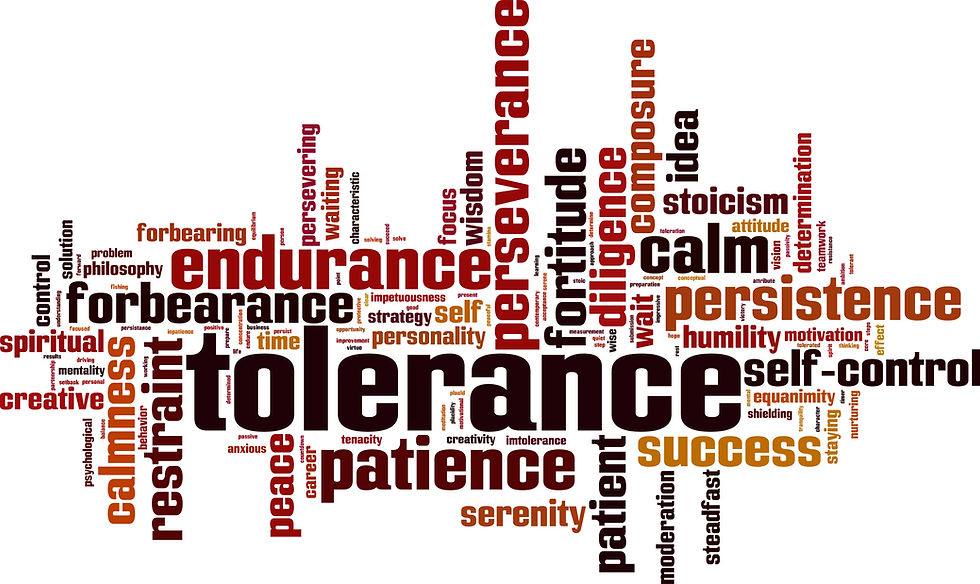
In his famous book ‘Meditations’ Marcus Aurelius wrote, “It never ceases to imagine me, we all love ourselves more than other people, but care more about the ‘opinion’ of others than ours.” What he meant was that a real Stoic who has a selfless goal, should go ahead in steadfast manner and care least for other’s opinions. But one should be a stoic first, with qualities such as patience, tolerance, perseverance, fortitude, calmness, endurance, diligence, composure, self-control, humility, etc., which are the real qualities of a Stoic. The citizens of every developed Nation, and every member in a well-to-do family and should look back at their roots and realise that their welfare of today was only because of the contribution of their forefathers. Be it wealth or wisdom. Along with the history books of great men, one should also probe about his own roots, his forefathers who had passed on knowledge, wealth, education, integrity; and realise what we would’ve been without their sacrifices and contribution. The future of every family also depends on whether the Head of the family is a Stoic or Epicurean. Sir Arthur Cotton, Tanguturi Prakasm Pantulu, JRD Tata, Abdul Kalam, and many more great souls struggled for the future generations and cared least for their own pleasures or pomp. They are all the great Stoics of our country.

A Stoic lays a seed which takes a generation of time to germinate with success. Likewise, one Epicurean is enough to degenerate or destroy the legacy of a Nation or a Family overnight. If one analyses the real cause for success in his family, and those around us, we can see that the origin was an existence of a Stoic in the earlier generation. For example, I faintly remember Shri Subramanyam, my co-brother-in-law’s Father whom I met only once in 1980. By that time he was already retired as a Head Clerk in Railways. I had the chance of interacting with him only for a few minutes. I could not miss his simplicity, and the invariable smile on his face that only wise people are attired with. Within his meagre salary he prioritised education to all his children. Later, his three sons rose to high Government ranks which is no ordinary success story. Two of them became IRSEE and IRAS officers and the youngest of them an IFS Officer, now retired after serving as a Principal Conservator of Forests. In return those children also gave importance to education to their children, and now they have a dozen Doctors and half a dozen Engineers in their family. All those achievements can never be acquired even by a highly wealthy family. The next generation did perceive and emulate some values from their Peer, whether it was simplicity or acute focus on higher education, but absolute belief on long-term success. What the Peers pass down need not be material wealth, but mostly it is the values that work out, and are permanent. Fortunate are the progeny who can perceive, and practice such Stoic values.
I understood it very late when I looked back at my own roots, and the profound sacrifices of my Grandfathers, the legacy of whom none in my family could carry forward despite all the rare resources at our disposal both monetary and virtue. I owe everything to two great Stoics in my family. I shall narrate in the coming two Blogs, the tale of two Brothers who sacrificed their pleasures but indulged in diverse activities. Both strived for the future generations. One for the Family wellbeing and the other for the Nation’s Freedom. There are also many more stories of people whom I know have the finest qualities, and I will love to share their profound qualities in future. I feel that a simple remembrance of gratitude to our forefathers, and of those Stoics whose contribution had caused tremendous change in our lives is at par to our spiritual prayers.


Comments